
An extraordinary meeting between the Executive Members and Zonal Representatives of the sports administration body and the Director General of the National Sports Commission, Hon. Bukola Olopade, has ended with renewed calls for the inclusion of team sports such as handball, volleyball, and hockey in future national competitions.
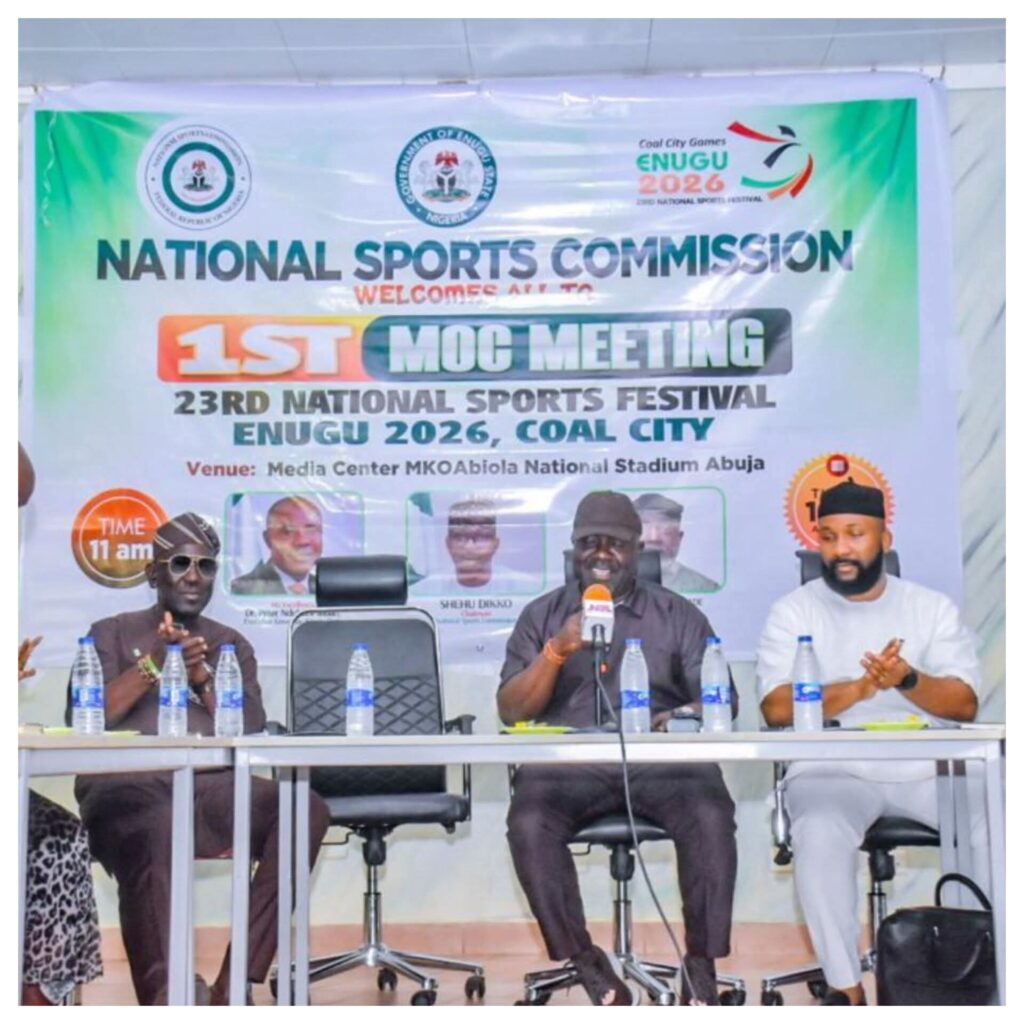
The high-level meeting, held in Abuja, brought together seven representatives from the six geo-political zones alongside the Acting Chairman to deliberate on pressing issues affecting the development of sports in Nigeria ahead of the nation’s sports transition period.
In his opening remarks, Secretary Tunde Ajibike explained that the meeting became necessary following widespread concerns over the reduction of participating sports to 15 compulsory and five optional events. According to him, the development has generated significant controversy within the sporting community and negatively impacted the image of the National Sports Commission and professional sports administrators responsible for advancing Nigerian sports to international standards.
Ajibike noted that stakeholders strongly advocated for the inclusion of major team sports, particularly handball, volleyball, and hockey, stressing that such games remain critical to grassroots development, youth engagement, and international competitiveness.The representatives also proposed an increase in the number of participating sports to 30 in order to accommodate additional sporting disciplines being demanded by stakeholders across the country.Responding to the concerns, the Director General of the National Sports Commission, Bukola Olopade, explained that some team sports were excluded due to the high financial burden associated with sponsoring them, especially as team sports often yield only a single medal despite involving large contingents.
However, the DG assured stakeholders that the Federal Government is committed to strengthening sports development through the various sports federations. He disclosed that plans are underway to support federations in organizing at least four competitions annually, a move aimed at exposing athletes to regular competitive opportunities and preparing them adequately for international tournaments.Barrister Olopade emphasized that the National Sports Festival alone cannot fully transform athletes into world-class performers, adding that sustained federation-based competitions would provide a stronger developmental structure for Nigerian sports.At the end of extensive deliberations, participants reached a compromise that saw the number of sports approved for the forthcoming Coal City Festival increased from 20 to 27.
The compulsory sports approved include Athletics, Para Athletics, Badminton, Para Badminton, Basketball, Wheelchair Basketball, Boxing, Cycling, Football, Gymnastics, Judo, Mixed Martial Arts, Swimming, Table Tennis, Para Table Tennis, Tennis, Taekwondo, Weightlifting, Para Powerlifting, and Wrestling.
The optional sports approved are Cricket, Canoeing and Para Canoeing, Darts, Golf, as well as Shooting and Para Shooting.The Director General further disclosed that the National Intermediate Games earlier scheduled to hold in Lagos State in August 2026 has been postponed to October 1–15, 2026.He also announced that the National Youth Games will now hold in the first quarter of 2027, while the National Sports Festival in Enugu State will proceed as earlier scheduled in November/December 2026.To consolidate preparations for federation competitions, especially for sports excluded from the next National Sports Festival, the Executive Members are expected to meet with various sports federations to develop strategic plans and strengthen organizational arrangements aimed at achieving sustainable growth in the sector.
The meeting concluded at exactly 6:00 pm with participants expressing optimism that continued dialogue and collaboration would reposition Nigerian sports for greater national and international success.